Names come and go like fashion. Baby names that are really popular and modern today will sound like typical mommy and daddy names in 25 years from now. In 60 years they will sound like granny names.
Today’s Noahs and Olivias will be tomorrow’s Michaels and Jessicas and will be next week’s Ronalds and Roses. The same happens in China. Just in China it happens with nicknames.
Sounds like a grown up
Chinese names don’t work like Western names. Last names still work a bit like Western names in the sense that there is a rather limited set of common names that people tend to have, like 王 (Wang), 张 (Zhang), and 黄 (Huang). Most people you will meet in China will probably have one of these last names, though of course, there are many more.
Given names are a whole different story, though. There are really no given names. People can just choose any characters and use them as a name. Imagine literally opening a whole dictionary and being able to pick any word you like and use it as a name! My wife and I enjoyed translating the names of places and people into each other’s language, and my wife’s best friends were called “Iron Man”, “Quotation Mark”, and “Study Forest”. The given name is then appended to the family name, i.e., family name first, given name second.
When parents try to find a name for their baby, they will think of what they wish for the child and select some nice sounding characters to describe their wishes. Study Forest’s parents obviously wanted him to become a good student. The other two guys I have no idea what their parents were thinking to be honest. For this reason, there are no “typical” Chinese names – any character could be a name. Often names are chosen to sound nice and poetic, but this also means that they tend to sound like grown up names. Certainly not cute and baby-like.
Cute like a baby
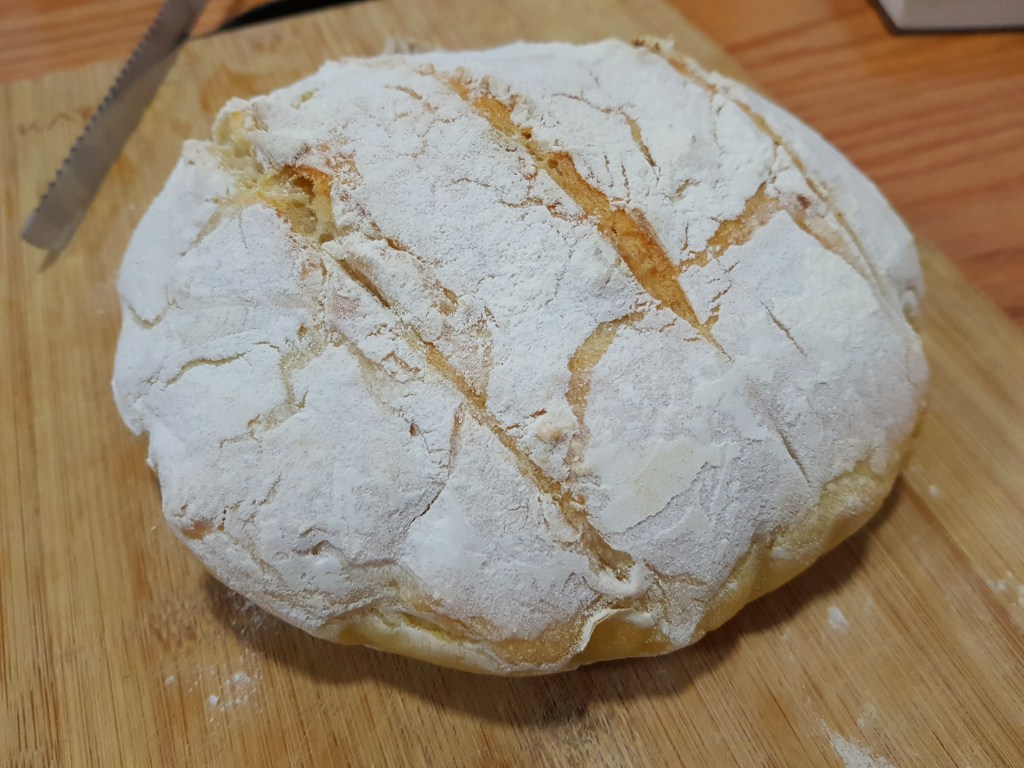
The solution to this problem is to give babies nicknames. One solution is to pick on the characters in the child’s real name, and just say it twice. But in recent years a new trend emerged: calling kids after food. Our cousin was called “Little Pudding“. A neighbour’s kid was called “Little Orange“. When my wife told me this, my attempt at being funny by saying “How about we call our kid Fat Potato or Loaf of Bread” miserably failed, because in the neighbourhood there were actually already two kids living that were called “Little Potato” and “Little Bread Roll“. For a moment I tried to think of a name that was so obviously ridiculous that she would get the irony, but then I realised that in this was just like this in China: food names are simply considered cute, certainly not ridiculous or offensive, and especially if you add a “little” (Xiǎo 小) in front of it. Intuitively, it does make some sense: who wouldn’t like a juicy tomato, or a sweet pineapple, or a well-fried beef-steak? These things are wonderful, and delicious, and bring people happiness, so that is considered a nice thing for a child. And it’s considered cute. In fact, many popular baby clothes will disguise the baby as some sort of food, too.
One of our neighbours’ kids didn’t quite match the theme, though: His name was “Little Train“. He was already seven years old. The wind of change blows fast: within these few years, the trend had moved from nicknaming children by typical toys that children might like, to food. Little Train had a little brother: “Little Spaceship“. His little brother was a new-born so he had a really old-school name, apparently. The reason for this was simple: Little Train was allowed to give is little brother a name, and he liked spaceships.
How would you chose a name?
When we were expecting a baby, we naturally spent a lot of time thinking about names. Our kids have both a Western and a Chinese name. We picked the Western name together, primarily according to one criterion: easy to pronounce for people from as many countries as possible. For the Chinese name, I didn’t feel competent to give much input to my wife’s ideas, nor do I have any sense of what sort of Chinese names sound nice and what sorts sound less nice.
There was only one aspect where I supported my wife: pick a name that you like, rather than what your parents like. This goes a bit against Chinese culture, where all sorts of things are negotiated in the whole family and the elder generation should generally be shown a lot of respect (in the form of accepting their advice and suggestions). My father-in-law was actually quite keen to give us some helpful ideas, but his suggestions were just so obviously bad choices that I really had to encourage my wife to push back and listen to her own gut-feeling.
His suggestions generally fell into four categories:
- The place where I was from: things like Bùláiméi 不来梅 (Bremen) or names containing the character Dé 德 from the word for Germany (Déguó 德国),
- The place name where my wife and I met: Lúndūn 伦敦, i.e., London,
- My wife’s field of study: i.e., any characters related to engineering, and
- Names related to the sky and space like Tàikōng 太空 (Space) or Tiānwén 天文 (Astronomy).
The last one was a bit odd: My field of study was earth sciences not space sciences. But my dad-in-law thought that earth sciences wasn’t quite as cool as space sciences, so he simply changed it. Of course, as an international family, the one thing we least wanted was a name that was strongly connected to one particular place or country. We wanted our child be at home anywhere I might chose to live.
Luckily, my wife stuck to her guns and chose a beautiful name for him, which roughly translates to “lustrous pavilion” which combines beauty and radiating light with the peace and tranquillity of a shady pavilion in a park or mountain. Actually, I don’t really know if the name sounds beautiful in Chinese, but I think it’s a beautiful name because every time I say or hear it, I feel the thoughtfulness and love that my wife had put into the selection of his name.
This is his “poetic grown up name”, and we really should have picked a cute food-based nickname, too. However, she had put so much passion into the choice of his real name that it immediately stuck so much that there was no space for a nickname. So on the Chinese playground our son will always be the Ronald.
 Grammar and Tones
Leave a comment